
The Power Pivot: Understanding the AC to DC to AC Conversion Journey
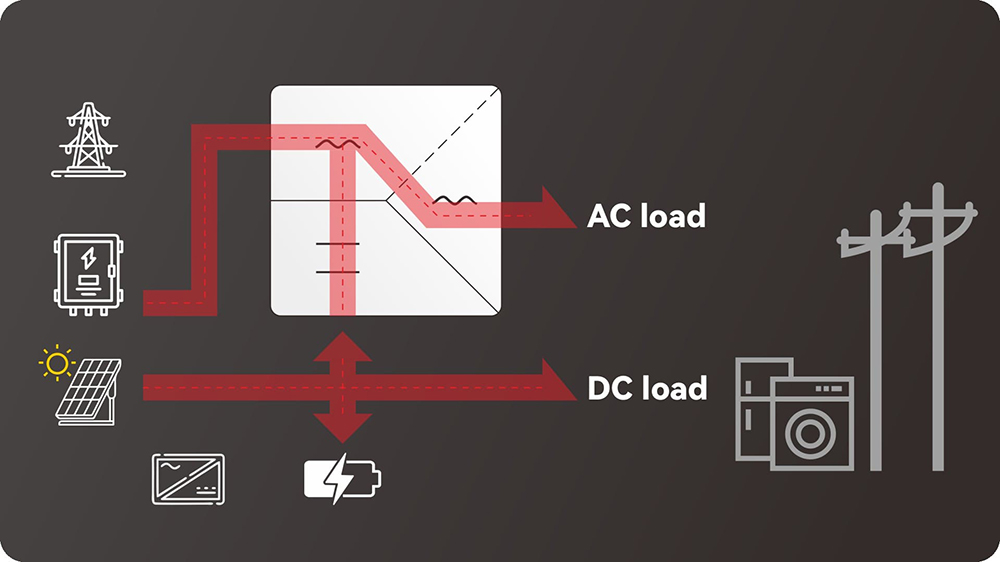
In the modern industrial world, electricity is rarely used exactly as it comes off the local utility grid. While the wall outlet provides a standard flow of alternating current, many of our most advanced technologies—from high-speed trains and industrial robotics to sensitive laboratory equipment—require power with specific characteristics that the grid simply cannot provide. This is where frequency conversion technology becomes essential. By utilizing a sophisticated three-stage process of converting electricity from alternating current to direct current and then back to alternating current, engineers can effectively rewrite the rules of electricity, providing the precise control needed for the twenty-first century.
The First Stage: Rectification and the Shift to Direct Current
The journey begins with a process called rectification. The electricity provided by utility companies is alternating current, meaning the flow of electrons periodically reverses direction, typically at a rate of sixty times per second in North America. While this is efficient for long-distance transmission, it is difficult to manipulate directly. To gain control over the power, the Visicomm Industries frequency converter first passes this incoming AC through a rectifier, which acts as a one-way valve system for electrons.
During this stage, the fluctuating waves of alternating current are flattened into a single, unidirectional flow of direct current. However, this initial DC is often “dirty,” containing ripples and fluctuations from the original AC source. To stabilize the power, it passes through a DC link or a filter section, which typically utilizes large capacitors to store energy and smooth out the voltage. This creates a stable, calm reservoir of energy that serves as the raw material for the final, most complex stage of the conversion process.
The Final Stage: Inversion and the Creation of Precision Power
Once the electricity is held in a stable DC state, it reaches the inverter stage. This is the “brain” of the frequency converter. The inverter uses high-speed electronic switches, usually insulated-gate bipolar transistors, to chop the direct current into sophisticated pulses. By varying the width and timing of these pulses—a technique known as Pulse Width Modulation—the converter can reconstruct a brand-new alternating current wave from scratch.
This is the moment where the “magic” happens. Because the new wave is being generated electronically rather than mechanically, the converter can set the frequency to whatever the application requires. It can produce 50Hz power for European machinery, 400Hz power for aerospace applications, or variable frequencies to control the speed of an industrial motor. This stage allows for total independence from the input source, ensuring that the output is perfectly tailored to the needs of the connected equipment.
Why This Double Conversion Matters for Industry
The primary benefit of this AC to DC to AC process is the total isolation and control it provides. In a simple mechanical conversion, the output is often tied to the input; if the grid frequency fluctuates, the output frequency fluctuates. By breaking the power down into DC and rebuilding it, the frequency converter acts as a firewall. Any noise, spikes, or instability on the utility side are stopped at the DC link, ensuring that the final output is pure, stable, and protected.
This technology is the backbone of the Variable Frequency Drive, which is used to control the speed of electric motors in everything from massive cooling towers to conveyor belts. By allowing a motor to run at exactly the speed required rather than full speed all the time, these converters can reduce energy consumption by as much as fifty percent. In a world increasingly focused on sustainability and carbon footprints, the ability to precisely modulate power usage is a massive economic and environmental advantage.
Conclusion
The transition from AC to DC and back to AC may seem like a redundant or overly complex path for electricity to take, but it is the secret to the precision and reliability of modern technology. By breaking the electrical flow down to its most basic form and then rebuilding it with electronic accuracy, frequency converters provide the flexibility that defines contemporary engineering. Whether it is protecting a sensitive medical scanner from a power surge or allowing a high-speed assembly line to operate with surgical precision, this technology is the invisible force that allows our global standards to interact seamlessly. As our world becomes more electrified and our machinery more specialized, the role of the frequency converter will only grow, serving as the essential translator in the global language of power.


